The Warm-Up Specificity Mismatch That's Leaving You Undertrained for the Real Workout
Quick Answer: A generic warm-up (some jogging, some arm circles) raises heart rate and body temperature but doesn’t prepare the specific joints and movement patterns your actual workout will demand. A warm-up that mimics the workout’s actual movements at low intensity — squats before a leg day, arm swings before an upper day — closes that specificity gap in the same amount of time.
You always do the same 5-minute warm-up: light jog, some stretches, done. Works fine for cardio days. On heavy squat day, though, your first working set still feels stiff and off — because the warm-up prepared your cardiovascular system, not your hips and knees for loaded squatting.

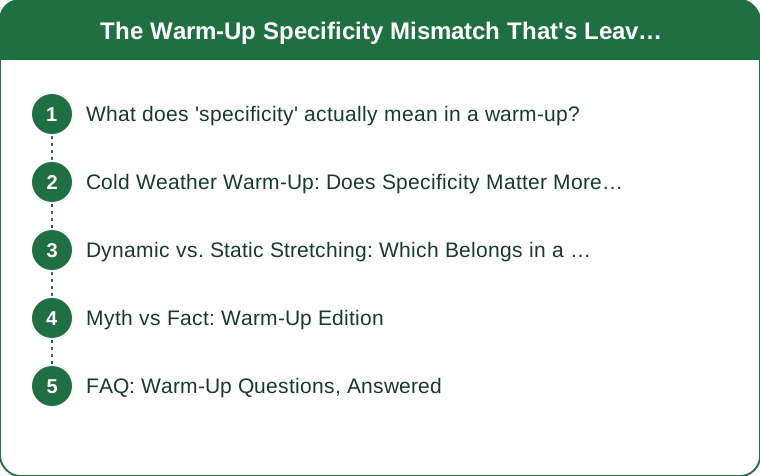
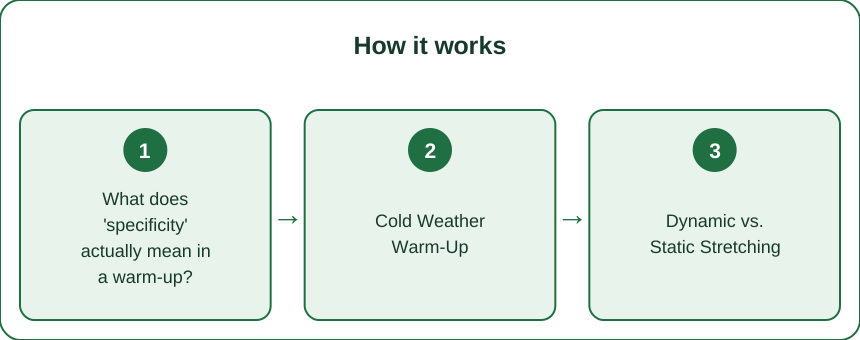
What does ‘specificity’ actually mean in a warm-up?
A specific warm-up rehearses the same joint angles and movement patterns the workout will use, just at lower intensity or load — bodyweight squats before a squat-heavy day, light arm swings and band work before an upper push day, ankle mobility work before a run.
A generic warm-up (jogging, general stretching) raises core temperature and heart rate, which matters, but it doesn’t prepare the specific tissues under the specific load pattern you’re about to ask them to handle.
Cold Weather Warm-Up: Does Specificity Matter More There?
Yes — in cold conditions, muscles and connective tissue take measurably longer to reach optimal temperature and elasticity, which widens the gap between a generic warm-up and a specificity-matched one. Cold-weather sessions benefit from extending the specific-movement portion of the warm-up by a few extra minutes rather than just adding more generic jogging.

Dynamic vs. Static Stretching: Which Belongs in a Specific Warm-Up?
Dynamic stretching (moving through a range of motion, like leg swings or walking lunges) belongs in the pre-workout warm-up — it rehearses the movement pattern while raising temperature. Static stretching (holding a stretch) is generally better placed after the workout, since holding a stretch pre-workout has been shown in some research to temporarily reduce power output in the stretched muscle.
Myth vs Fact: Warm-Up Edition
Myth: A longer warm-up is always a better warm-up. Fact: A well-targeted 8-10 minute specific warm-up often prepares the body better than a 20-minute generic one — specificity matters more than duration past a certain point.
Myth: Static stretching before a workout prevents injury. Fact: Dynamic, movement-based warm-ups are generally better supported for injury prevention immediately pre-workout; static stretching’s injury-prevention benefit is better supported post-workout or on separate flexibility days.
Myth: The same warm-up works for every type of workout. Fact: A cardio-focused warm-up and a heavy-lifting warm-up should look different — matching the warm-up to the day’s specific demand is the whole point of specificity.
FAQ: Warm-Up Questions, Answered
How long should a specific warm-up actually be?
8-10 minutes is typically enough when it’s targeted to the day’s movements, versus 15-20+ minutes of generic activity that doesn’t prepare the same tissues as directly.
Should warm-up intensity increase gradually?
Yes — start at very low intensity/load and build toward roughly 50-70% of your working intensity by the end of the warm-up, so your first working set isn’t the first time you’ve moved at meaningful load.
Is a warm-up necessary for shorter or lighter workouts?
Some warm-up remains useful even for lighter sessions, but the specificity principle still applies — a shorter, still movement-matched warm-up beats skipping it or defaulting to generic jogging.
TL;DR:
- A generic warm-up raises temperature but doesn’t prepare the specific joints and patterns your workout needs
- Match warm-up movements to the actual workout — squats before leg day, arm swings before upper day
- Dynamic stretching belongs pre-workout; save static stretching for after
- Cold conditions widen the specificity gap — extend the movement-specific portion, not just the general jogging
Swap your generic 5 minutes for 5 minutes that actually rehearse today’s movements — same time investment, meaningfully better prep.
Keep Reading
This article is for general informational and styling purposes only. Fit, sizing, and product availability may vary.