The Ramp to Heavy: Warm-Up Sets That Prime Instead of Exhaust
Between the general warm-up and the day’s heavy work lives lifting’s most-fumbled transition: warm-up sets — too few and the first work set doubles as rehearsal; too many and the workout’s freshness gets spent on the ramp. The percentage ladder, with the rep-taper trick.

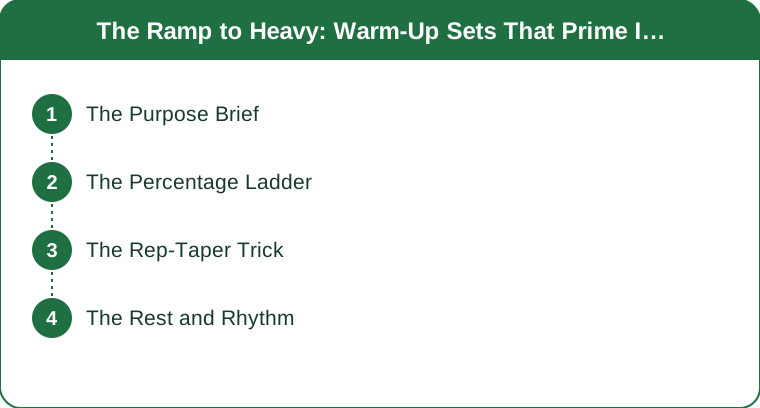
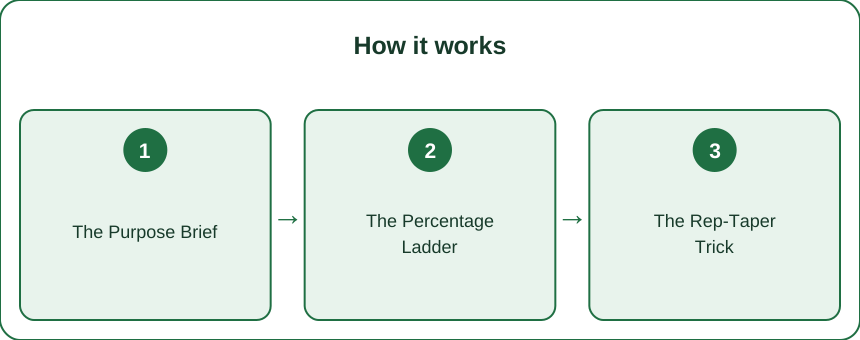
The Purpose Brief
Warm-up sets rehearse the EXACT movement at rising loads: groove confirmed, nervous system primed, joints loaded progressively — general warmth (the RAMP formula’s job) doesn’t substitute; the squat pattern warms up by squatting. Every big lift gets its own ladder.
The Percentage Ladder
The standard ramp to a work weight: empty bar (always — the veterans’ consistency on this is the tell), then roughly 40-55-70-85 percent, arriving at the work weight. Lighter training days need fewer rungs; the heaviest days earn one extra near the top.

The Rep-Taper Trick
The fatigue-management secret: reps DECREASE as weight climbs — 8-10 at the empty bar, 5 at forty percent, 3 at seventy, 1-2 at eighty-five. The taper delivers full priming at minimal fatigue cost; the classic error (fives all the way up) spends the session’s best reps on the ladder.
The Rest and Rhythm
Ladder logistics: short rests between warm-up rungs (30-60 seconds — these aren’t work sets), full rest before the first real set, and the day-one calibration footnote: new-to-you lifts run the ladder slower with form as the cargo. The ramp’s whole grade: the first work set should feel like the fifth rehearsal, not the premiere.
Empty bar always, percentages rising, reps falling, rests short till the top. The ramp was never optional cardio before lifting — it was the rehearsal that makes the show’s first lift look practiced, because it was.
Keep Reading
This article is for general informational and styling purposes only. Fit, sizing, and product availability may vary.