Why Your Warmup Needs to Be Longer on a Cold Morning Than in Summer
The same warmup routine, roughly the same number of minutes and drills, gets used year-round regardless of the weather outside. But cold ambient temperature slows blood flow to the muscles and takes longer to raise core and muscle temperature to a safe working range, meaning a warmup that’s plenty on a warm day can leave muscles genuinely underprepared on a cold morning.

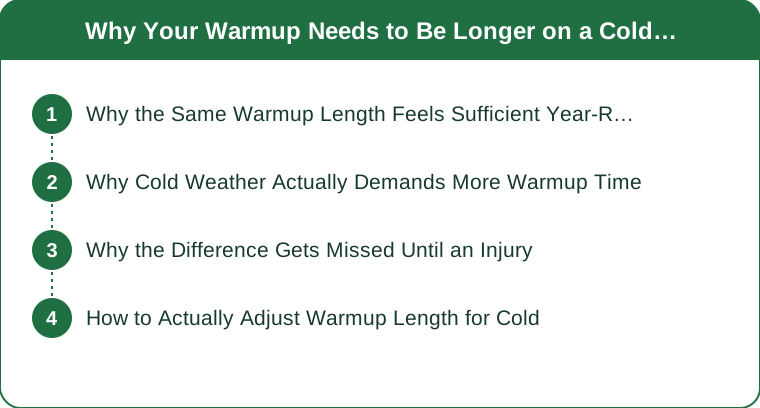
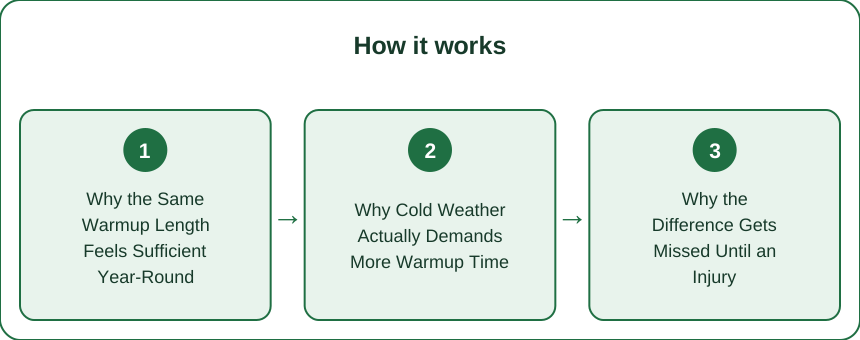
Why the Same Warmup Length Feels Sufficient Year-Round
The routine-consistency habit: a warmup being treated as a fixed, memorized sequence of minutes and drills that gets run through the same way regardless of season, since consistency itself feels like the responsible approach.
Why Cold Weather Actually Demands More Warmup Time
The thermoregulation reality: cold ambient air causing blood vessels near the skin and muscles to constrict to preserve core heat, which slows blood flow to the exact tissues a warmup is trying to prepare, meaning it genuinely takes longer in cold conditions to raise muscle temperature to the range where they move and stretch safely.

Why the Difference Gets Missed Until an Injury
The overlap: a warmup that feels complete based on the usual number of minutes elapsed, without any felt signal that the muscles are actually at a different starting temperature than they would be on a warmer day, which is why the gap often only becomes obvious after a strain or pull on a cold morning.
How to Actually Adjust Warmup Length for Cold
The practical rule: extending warmup time by roughly five to ten additional minutes in cold conditions, and confirming readiness by a light sweat or genuinely looser range of motion rather than by the clock alone, and the frame (cold air constricts blood flow and slows how fast muscles reach a safe temperature — extending warmup time on cold days is what actually prevents avoidable strains.)
The same warmup routine gets used year-round regardless of the weather, but cold ambient air causes blood vessels near the skin and muscles to constrict to preserve core heat, slowing blood flow to the exact tissues a warmup is trying to prepare. A warmup that feels complete based on the usual number of minutes elapsed gives no felt signal that muscles are starting from a different temperature than on a warmer day, which is why the gap often only shows up after a strain on a cold morning. Extending warmup time by five to ten minutes in cold conditions is what actually prevents avoidable injury.
Keep Reading
This article is for general informational and styling purposes only. Fit, sizing, and product availability may vary.