Should You Actually Warm Up Before a Cold Plunge? The Paradox Explained
Quick Answer: A light warmup before a cold plunge doesn’t reduce the cold shock response, and it isn’t meant to — it’s meant to prepare your cardiovascular system and mental state so the shock response is more manageable, since the actual physiological reaction to cold immersion (increased heart rate, sharp breathing) is more comfortable to handle from an already-alert baseline than a completely cold-started one.
It seems contradictory: why raise your body temperature and heart rate right before intentionally dropping into cold water? The answer isn’t about staying warmer longer — it’s about how your body handles the shock itself.

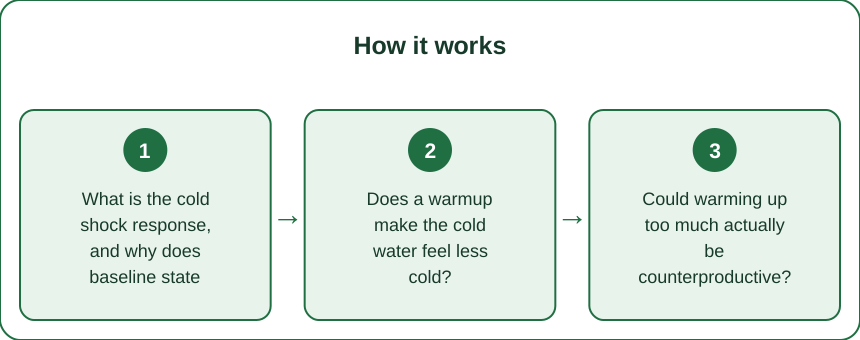
What is the cold shock response, and why does baseline state matter?
Cold shock response is an involuntary reaction to sudden cold immersion — gasping, rapid breathing, and a spike in heart rate, driven by your sympathetic nervous system. This response happens regardless of pre-plunge warmup, but people who enter from a more physiologically and mentally alert baseline (rather than a stone-cold, half-asleep state) generally report the sensation feels more manageable and less overwhelming.
Does a warmup make the cold water feel less cold?
No — this is the key misconception. A light warmup doesn’t reduce how cold the water feels or change your actual skin temperature drop meaningfully. What it changes is your nervous system’s readiness to handle the shock response calmly, through controlled breathing and an already-elevated, focused state, rather than making the physical cold sensation itself less intense.

Could warming up too much actually be counterproductive?
Yes, potentially — an intense warmup that raises your core body temperature substantially before a cold plunge can increase the perceived temperature differential your body experiences, making the shock feel more extreme, not less. A light, brief warmup (a few minutes of easy movement and breathing focus) is generally recommended over a full intense workout immediately beforehand.
What Nobody Tells You About Cold Plunge Prep
Most cold plunge guidance focuses heavily on breathing technique during the plunge itself, but the few minutes immediately before matter almost as much — arriving mentally distracted or physically tense tends to make the shock response feel more chaotic, while a brief, calm warmup routine (light movement plus a few slow breaths) sets a baseline that many practitioners find makes the actual immersion noticeably easier to settle into quickly.
FAQ: Warming Up Before Cold Plunge, Answered
Is it safer to cold plunge after a workout or before one?
After a workout is more common and generally considered lower-risk, since a full intense workout followed immediately by a very light-warmup-only cold plunge avoids overly extreme temperature swings; consult a doctor if you have cardiovascular conditions before starting cold exposure practice. This is general information, not medical advice.
How long should a pre-plunge warmup actually be?
A few minutes of light movement and slow breathing is typically enough — the goal is alertness and calm readiness, not raising core temperature significantly.
Does this apply the same way to cold showers as full cold plunges?
The same general principle applies, though cold showers are a milder shock overall, so the warmup’s role is somewhat less pronounced than for full-body cold immersion.
TL;DR:
- A pre-plunge warmup doesn’t reduce how cold the water feels — it prepares your nervous system, not your skin
- The cold shock response happens regardless of warmup, but feels more manageable from an alert baseline
- An intensely raised core temperature beforehand can make the shock feel more extreme, not less
- A brief, calm warmup routine — light movement plus slow breathing — is the generally recommended approach
The warmup was never about staying warmer in the water — it’s about meeting the shock from a steadier starting point.
Keep Reading
This article is for general informational and styling purposes only. Fit, sizing, and product availability may vary.