The Perfect Warmup: 8 Minutes That Upgrade Every Workout
Nobody ever posted their warmup on Instagram, which is exactly why nobody does one — and why the first fifteen minutes of most workouts are quietly terrible: stiff squats, cranky shoulders, effort that feels harder than it should. A proper warmup is not stalling before exercise; it is the tuning that makes the exercise work. Eight minutes, one simple formula, better sessions forever. Here is the science and the script.

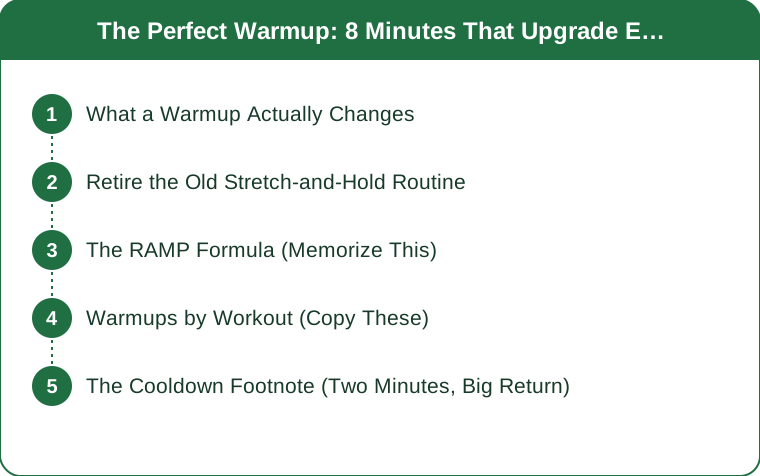
What a Warmup Actually Changes
Physiology in fast-forward: a few minutes of rising activity literally warms muscle tissue (warmer muscle contracts faster and stretches further), thins joint fluid so knees and hips glide instead of grind, redirects blood flow from organs to working muscles, and — most underrated — wakes the nervous system, rehearsing movement patterns so your first heavy set is not also your first practice rep. Cold starts are where tweaks live. Warm starts are where personal records do.
Retire the Old Stretch-and-Hold Routine
The gym-class ritual of holding long static stretches before exercise has aged badly: research shows extended pre-workout static stretching can temporarily reduce strength and power output — you are gently sedating the muscles you are about to need. Static stretching still has a home after training or in the evening, when relaxing muscles is the point. Before training, everything should move: dynamic stretches that take joints through range actively, arriving warm instead of sleepy.

The RAMP Formula (Memorize This)
Sports scientists structure warmups as RAMP: Raise — 2–3 minutes easing your heart rate up (brisk walk, easy row, light jump rope). Activate — wake the key muscles: glute bridges and band walks before leg day, band pull-aparts and scapular pushups before upper body. Mobilize — dynamic range work: leg swings, hip circles, deep squat holds with reach, arm circles. Potentiate — rehearse the coming work lightly: empty-bar squats, easy first interval, gradual build. Total: eight minutes, every base covered.
Warmups by Workout (Copy These)
Strength day: 2 minutes cardio, glute bridges x12, band walks x10 each way, leg swings x10 each, deep squat hold 30 seconds, then two light warm-up sets of your first lift. Running: 3 minutes brisk walk, leg swings, walking lunges x10, high knees and butt kicks 20 meters each, then run the first kilometer easy. Morning or home workout: 60 seconds march, arm circles, cat-cow x8, inchworms x5, bodyweight squats x10. None exceed eight minutes. All of them pay the time back inside the session.
The Cooldown Footnote (Two Minutes, Big Return)
While we are fixing bookends: the cooldown deserves two honest minutes — walk until your breathing settles, then now do the static stretches, holding calves, quads, hips and chest 30 seconds each while muscles are warm and receptive. It kick-starts recovery and doubles as the transition ritual between workout-you and rest-of-life-you. Skipping it will not injure you the way cold starts can, but taking it is how today’s session stops echoing into tomorrow’s stiffness.
Eight minutes: raise the heat, activate the helpers, mobilize the hinges, rehearse the work. That is the whole discipline, and it upgrades every single session it precedes — heavier lifts, smoother runs, fewer tweaks, better first fifteen minutes. The warmup is not the opening act you skip. It is the sound check that decides how the show goes. Start tomorrow’s workout eight minutes earlier, and notice everything.
Keep Reading
This article is for general informational and styling purposes only. Fit, sizing, and product availability may vary.